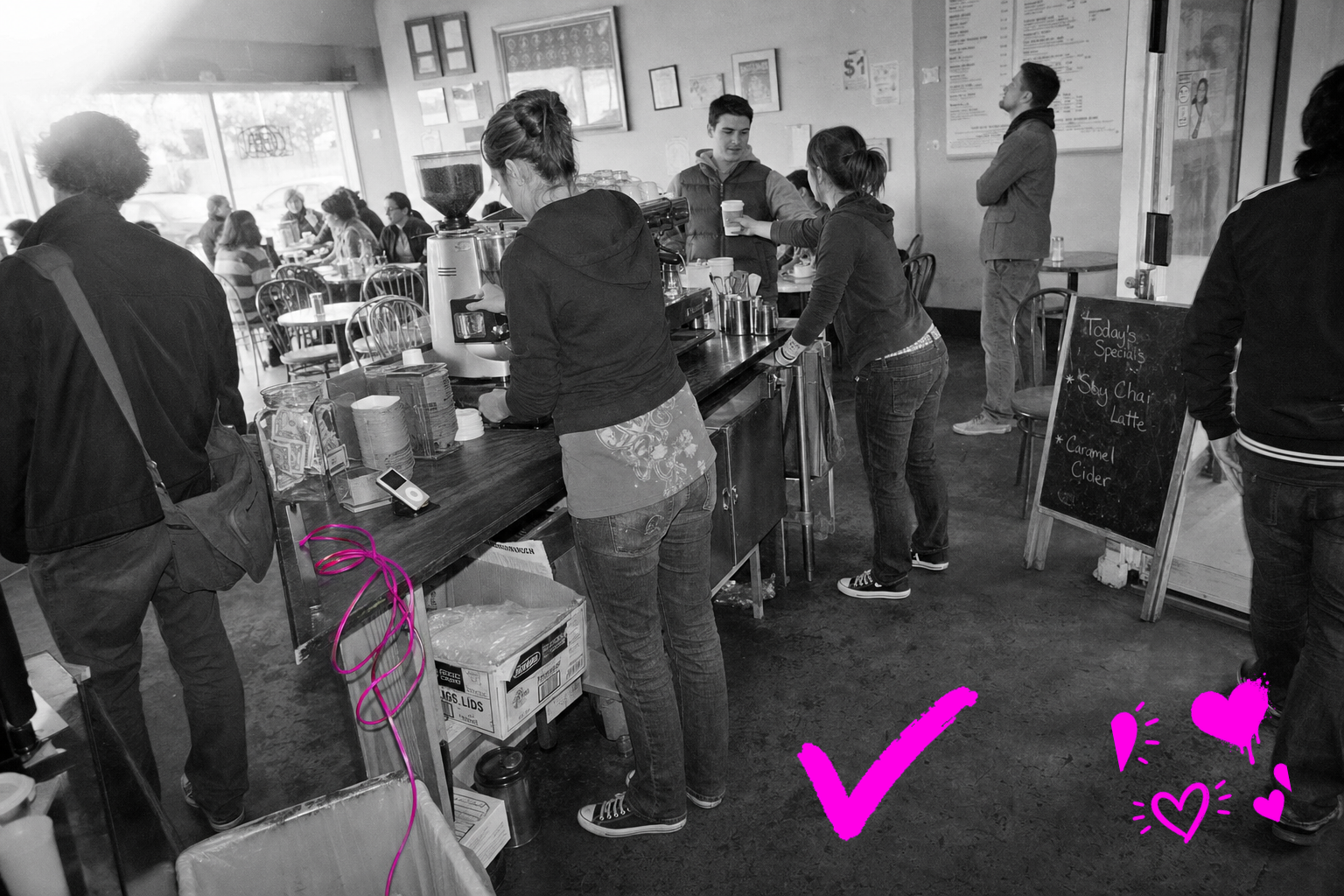
The Money Case for Going local
andrew @ anti/corporate
June 24, 2026
657 words · 3 minutes
Everyone assumes the safer financial bet is to go online, go national, or buy into a franchise. The math suggests local may be smarter.
The hidden cost of getting customers
One of the biggest financial advantages of a local business rarely gets talked about: customer acquisition cost (CAC), the cost to get a new customer through the door.
For an e-commerce or online business, CAC typically ranges from $30 to $150 per customer and is often higher for premium products. ¹ To compete in the cluttered online space, businesses spend on digital ads, influencer marketing, sign-up discounts, and website development. Those costs add up fast and never really stop.
Local businesses operate differently. Your market is geographically defined, so you are not competing with every business on the internet, just the ones near you. In our research, 51% of Americans discover local businesses through a recommendation from a friend, family member, or coworker, and 49% simply by walking or driving past. ² Together, those two free channels reach more people than social media and paid search combined. Your best marketing is already happening, and it costs nothing.
And local customers are not shopping purely on price. 62% of Americans say they are willing to pay more to shop at a local business. ² That means you are not in a race to the bottom on cost… You are competing on experience, relationship, and trust. Those are advantages a local business can win.
Local is scrappy, so less money is needed
Ben & Jerry’s started with $12,000, roughly $60,000 in today’s dollars, in a converted gas station in Burlington, Vermont. ³ They couldn’t afford bagel equipment, so they made ice cream instead. They took a $5 correspondence course in ice cream-making from Penn State and figured out the rest as they went.
That is not an origin story about having the right resources. It is a story about starting with what you have and building from there.
Local businesses have a structural advantage here, too. You can design your business around your budget because you are making the decisions. Start with a food truck before committing to a restaurant. Sell at local craft fairs before opening a storefront. Partner with another local business to share space and split costs. Every one of those is a real path that real businesses have taken.
The goal in the beginning is not to build the finished version of your business. It is to build the first version, the one that lets you learn, adjust, and grow.
There is money set aside for local businesses
Most local business owners do not know this, but there are funding sources specifically designed for businesses like theirs.
Cities and towns often provide grants or low-interest loans to attract and retain local businesses. Federal programs exist to support businesses in rural and underserved areas. Regional banks frequently prioritize local lending as part of their mission, and unlike national lenders, they often underwrite loans locally, meaning they can weigh the specific dynamics of your community when making a decision.
Start by searching for a community loan fund in your area, contacting your local chamber of commerce, or visiting the Small Business Administration at sba.gov. ⁴ The money exists. Most people just never go looking for it.
The anti/corporate point of view
Local businesses do not need to out-spend corporate America. They need to outsmart it.
Ben & Jerry’s didn’t beat Häagen-Dazs by outspending them. They beat them by being more specific, more human, and more connected to the community that loved them.
That is the local business advantage. The customers who find you through a neighbor’s recommendation or by walking past your window are not casual shoppers. They are the beginning of something that no ad budget can buy.
Sources
¹ Various e-commerce industry benchmarks, including Shopify and HubSpot customer acquisition cost studies*
² anti/corporate pro local. 2026; online survey, n=1,100 U.S. adults
³ Ben & Jerry’s company history, benjerry.com
*⁴ U.S. Small Business Administration, sba.gov; America’s Small Business Development Centers, asbdc-us.org